
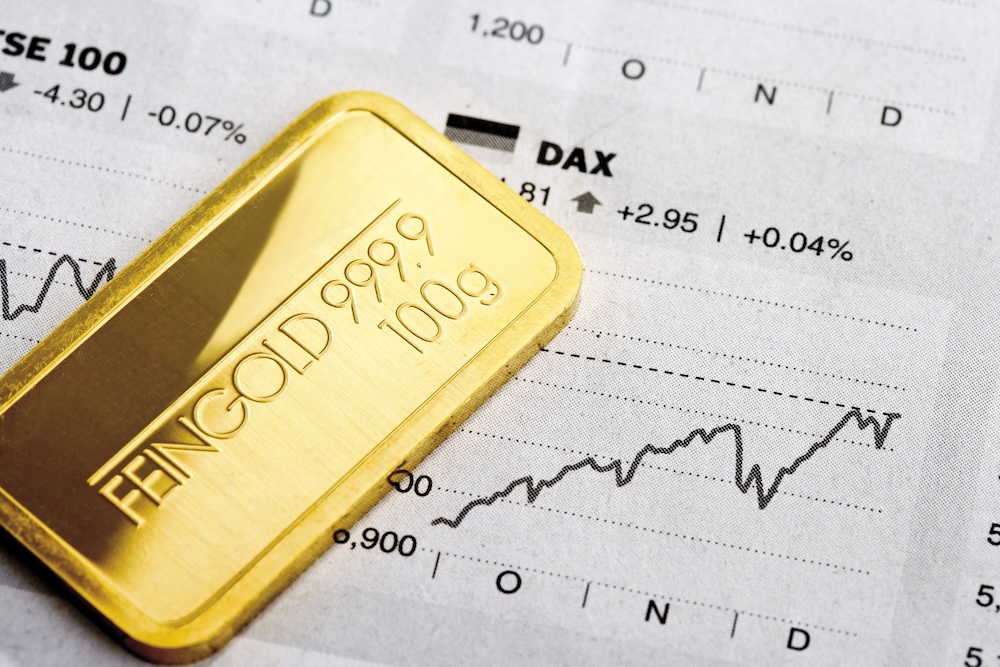
Gold prices have been holding near recent highs, and that strength is beginning to filter through to the TSX in a more visible way.
Canadian markets have always had a close relationship with commodities, but gold’s current position stands out. As investors look for stability amid ongoing uncertainty around interest rates and global growth, the metal has regained its appeal as a defensive asset.
That shift is showing up in equity performance.
Gold producers listed on the TSX have seen renewed attention, with gains reflecting both price support and improved investor sentiment. For companies in the sector, higher prices translate directly into stronger margins, particularly for operations that have already managed costs effectively.
There is also a broader positioning story.
When uncertainty increases, investors tend to look for assets that are less sensitive to economic cycles. Gold fits that profile, and its recent performance suggests that more capital is moving in that direction.
At the same time, the environment is not one-dimensional.
Interest rate expectations remain a key variable. Gold does not generate yield, so its appeal often increases when rates are expected to fall or stabilize. As markets reassess the timing of potential rate cuts, those expectations are feeding into demand for the metal.
For the TSX, the effect is familiar but still important.
The index has significant exposure to resource sectors, and movements in gold can influence overall performance, particularly when other areas of the market are more mixed. While financials and energy remain dominant, gold can act as a stabilizing force during periods of uncertainty.
That does not eliminate risk.
Commodity prices can shift quickly, and gold is no exception. Changes in interest rate expectations, currency movements, or broader market sentiment can alter the outlook in a short period of time.
Even so, the current strength reflects a market that is still looking for clarity.
For investors, gold’s position is less about short-term momentum and more about how it fits into a broader portfolio. Its recent performance suggests that, at least for now, it remains part of that conversation.




