
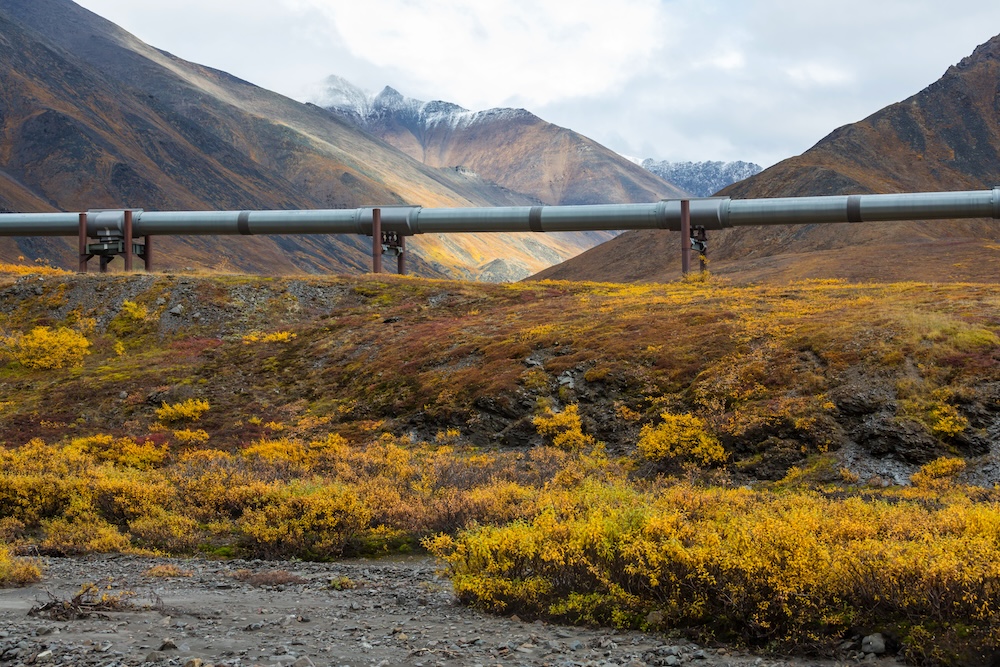
A pipeline project cancelled more than five years ago has unexpectedly returned to the Canada-U.S. business conversation.
U.S. President Donald Trump raised the possibility of reviving Keystone XL this week while discussing trade negotiations with Canada, reopening a debate over a project that once occupied a central place in the relationship between the two countries.
Keystone XL was designed to carry approximately 830,000 barrels of crude oil per day from Alberta to Nebraska, where it would connect with existing pipelines serving refineries on the U.S. Gulf Coast. The project faced years of regulatory and political battles before President Joe Biden revoked its presidential permit in 2021.
Trump’s comments do not mean construction is about to resume. The circumstances surrounding Canadian energy have changed significantly since the original project was proposed.
The Trans Mountain expansion has increased Canada’s ability to ship oil to the Pacific Coast, giving producers greater access to Asian markets. Ottawa is also placing more emphasis on reducing the country’s dependence on a single export market, particularly after months of trade disputes with Washington.
Alberta has a different perspective. Premier Danielle Smith continues to support additional pipeline capacity, including projects that would increase exports to the United States. For the province’s energy sector, additional transportation options can help producers reach more customers and reduce the risk of bottlenecks.
The commercial case is more complicated.
Canadian oil production would need to grow enough to fill additional pipelines, and that requires major investment by producers. The Financial Times reported that industry estimates suggest roughly $100 billion in additional investment could be required to expand oil sands output enough to support both Keystone XL and other new pipeline capacity.
Oil companies would have to decide whether those investments offer better returns than alternatives such as dividends, share buybacks or smaller projects. Investors have spent years encouraging large producers to maintain financial discipline rather than pursue growth at any cost.
There would also be regulatory, environmental and political hurdles on both sides of the border. A presidential endorsement in Washington would address only one piece of a project that crosses jurisdictions and requires enormous amounts of private capital.
That does not make Trump’s proposal meaningless. Energy security has become more important amid geopolitical instability, while U.S. refineries remain significant customers for Canadian heavy crude. A new pipeline could deepen that relationship at the same time Canada is trying to diversify it.
For now, Keystone XL is better understood as a possibility than a project.
Its unexpected return tells us something important, however. Energy infrastructure is once again becoming part of the bargaining table between Canada and the United States, and Canadian businesses will be watching closely to see whether the conversation survives beyond this week’s trade negotiations.




