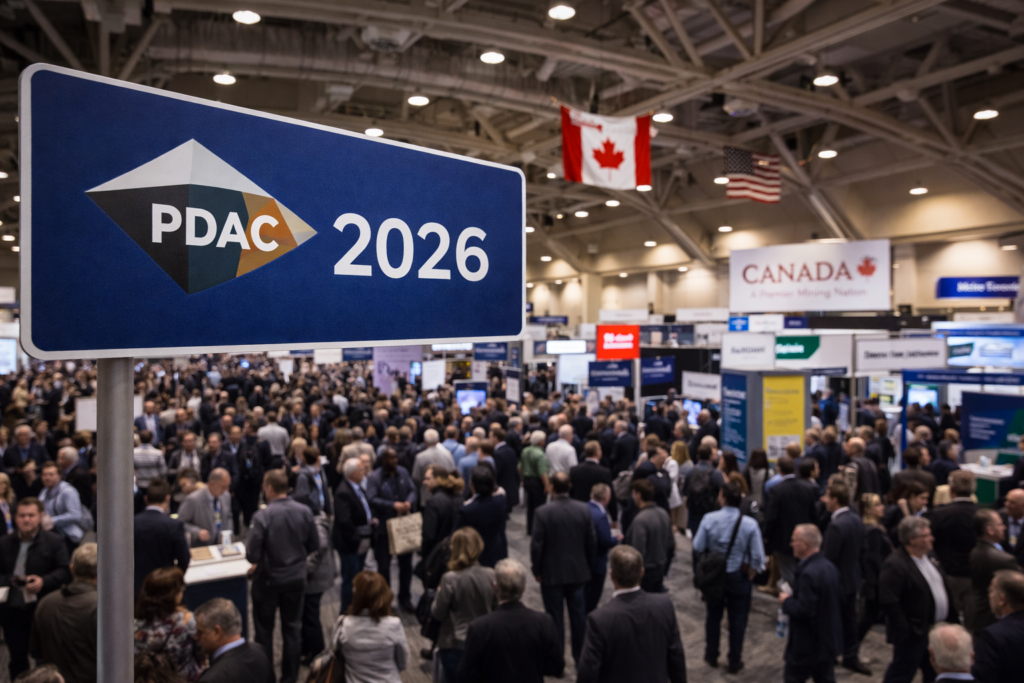
As PDAC 2026 moves into its second full day in Toronto, the formal panels tell only part of the story. The more revealing signals often emerge in quieter settings — between sessions, in hotel lobbies, and in impromptu meetings across the Metro Toronto Convention Centre.
While the macro themes are familiar — critical minerals, supply chain security, and capital discipline — the tone this year feels more pragmatic than promotional.
One noticeable shift on the floor is the absence of speculative exuberance. In past cycles, PDAC often carried a visible current of early-stage optimism, particularly among junior explorers seeking retail attention.
This year, conversations appear more focused on balance sheets, project timelines, and jurisdictional clarity.
Institutional capital remains present, but it is measured. Investors are asking detailed questions about permitting pathways, infrastructure access, and offtake agreements rather than chasing thematic narratives alone. In a higher-cost capital environment, feasibility is carrying more weight than concept.
Beyond the exploration booths, infrastructure discussions are increasingly prominent. Power access, port logistics, and grid stability are no longer secondary considerations — they are central to project viability.
Several panels have underscored the link between mining and broader industrial policy. Governments are not simply discussing resource extraction; they are framing mining as a foundation for domestic processing, manufacturing, and technology ecosystems.
That shift changes how projects are evaluated. It is no longer enough to demonstrate resource size. Developers are expected to show integration potential within downstream value chains.
Environmental and social governance discussions continue to feature prominently, though the language has evolved.
Rather than broad commitments, companies are highlighting specific engagement models with Indigenous communities, measurable emissions targets, and concrete water management plans. The tone is less aspirational and more operational.
There is also recognition that community relationships are not peripheral risk factors. They are core components of project timelines.
While PDAC is a commercial conference, geopolitics remains a quiet backdrop.
Supply chain diversification, strategic minerals, and cross-border investment reviews are shaping deal structures even when not explicitly mentioned in presentations. Delegations from multiple jurisdictions are emphasizing reliability, regulatory transparency, and long-term partnership frameworks.
For companies, navigating that landscape requires both technical expertise and diplomatic awareness.
Perhaps the clearest takeaway so far is that the mining sector appears to be operating in a more mature capital cycle.
Exploration remains vital, but advancement capital is being directed toward projects with defined permitting pathways and credible financing plans. The emphasis is on execution rather than discovery headlines.
That does not suggest caution has replaced ambition. It suggests ambition is being filtered through a tighter capital lens.
As PDAC progresses, attention will likely turn to announced partnerships, financing updates, and government engagement outcomes. But some of the most meaningful signals may remain subtle — reflected in who is meeting repeatedly, which booths attract sustained attention, and where capital appears prepared to commit beyond the conference floor.
PDAC has always been as much about momentum as mineral deposits. This year, the momentum feels disciplined.
Whether that discipline translates into sustained project advancement in the months ahead will depend less on conference attendance and more on follow-through once Toronto’s convention halls empty.
For now, the prevailing tone is clear: selective capital, infrastructure focus, and measured optimism are defining PDAC 2026.