
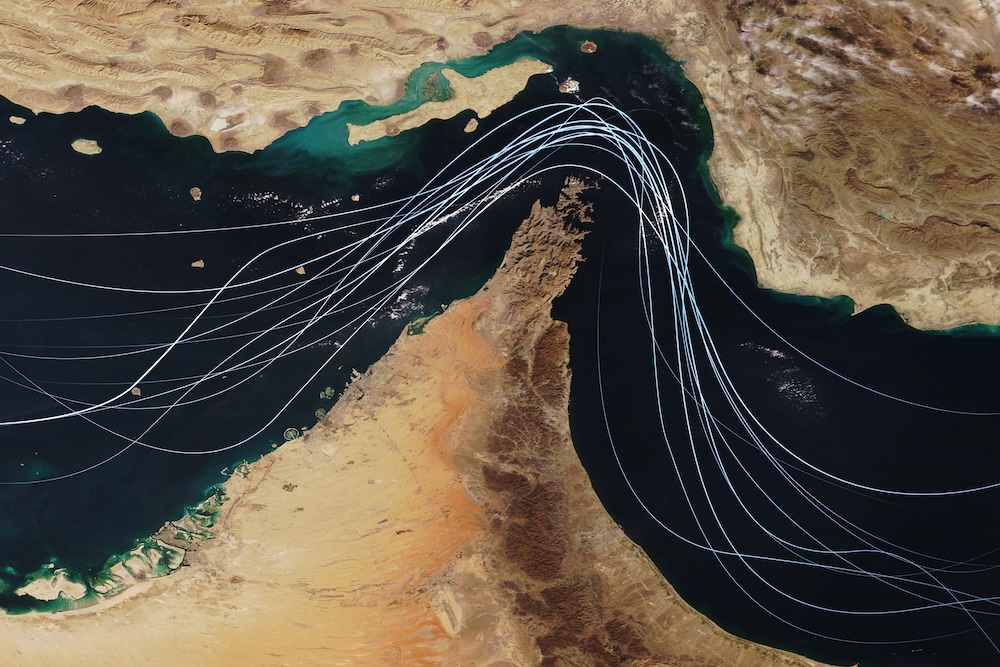
Renewed attention on the Strait of Hormuz is putting energy markets back on alert, with implications that extend well beyond the Middle East.
The narrow waterway handles a significant share of global oil shipments, making it one of the most critical chokepoints in the global energy system. Any disruption—whether real or perceived—has the potential to move prices quickly.
Recent commentary from industry leaders has highlighted how exposed global supply chains remain to geopolitical risk in the region. Even without an immediate interruption to flows, the possibility of instability is enough to influence pricing, insurance costs, and shipping behavior.
For Canada, the effects are indirect but meaningful.
Higher oil prices tend to support Canadian producers, particularly those operating in Western Canada. When global benchmarks rise, Canadian crude—despite its pricing differentials—benefits from stronger overall demand and improved revenue conditions.
At the same time, volatility introduces uncertainty.
Energy markets are not just reacting to supply and demand fundamentals, but to risk perception. That can create short-term price swings that are difficult to predict and even harder for companies to plan around.
There is also a broader trade dimension.
Canada’s position as a relatively stable energy supplier becomes more relevant when global supply chains appear fragile. While infrastructure constraints limit how quickly Canadian exports can expand, periods of geopolitical tension often reinforce the strategic value of secure, politically stable sources of energy.
For investors, the situation highlights a familiar dynamic.
Oil markets can shift quickly when geopolitical risks rise, and those shifts tend to flow through to equities, currencies, and broader market sentiment. Canadian energy stocks, which carry significant weight on the TSX, are particularly sensitive to those movements.
The current focus on the Strait of Hormuz is a reminder that energy markets are shaped by more than production levels and inventories. Geography and geopolitics continue to play a central role.




